
I was delighted to receive advance review copies of the first two books in the Below the Breath of the World series by H. L. Dawson. There’s always something special about being able to step into a new world before release, and this series offers a particularly atmospheric one—set beneath the ocean’s surface in a haunting, crumbling future where survival, mystery, and identity collide.
Blending rich worldbuilding with a slow-burn under-the-sea monster romance, the series explores not only the dangers lurking in the depths but also the complicated relationships that grow between its characters. As the story unfolds, secrets rise from the deep along with questions of heritage, belonging, and what it truly means to be human.
I thoroughly enjoyed my time exploring this drowned world and getting to know Mizu and the characters around her. Below you’ll find my reviews for the first two books, Deeper Than Black and Darker Than Blue, which dive into the world, characters, and twists that make this series such a compelling read.
I hope you enjoy the reviews—and perhaps discover a new series to add to your reading list.
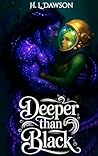 Deeper than Black by H.L. Dawson
My rating: 4 of 5 stars
Deeper Than Black immediately pulled me in with its immersive setting and the quiet resilience of its protagonist. The story follows Mizu, a scrap diver living in the decaying domed city of Boba 7, where survival depends on what can be salvaged from the dark, crushing depths outside the city’s walls. It’s a world built from rusting technology, fragile ecosystems, and people who have learned to survive in a place that feels like it’s slowly falling apart.
One of the strongest elements of this book is the worldbuilding. The underwater environment feels tangible and dangerous, from the claustrophobic domed city to the eerie silence of the abyss where Mizu works. The details about diving, salvage work, and the technology used to survive underwater add a layer of realism that makes the setting feel lived-in. The Oxyphyte helmet, which acts as Mizu’s lifeline while she explores the depths, is a particularly effective detail that reinforces the constant tension of her profession.
Mizu herself is a compelling protagonist. At thirty-two, she isn’t the typical wide-eyed hero discovering the world for the first time. Instead, she’s someone shaped by hardship and survival, cautious and observant, with good reason to keep looking over her shoulder. Her physical strength and diving skills make her capable, but it’s her resilience and adaptability that truly define her character. Watching her navigate the dangers of her world—and the complicated relationships around her—makes for an engaging journey.
The supporting characters also add intriguing layers to the story. Fin, who has a complicated history with Mizu, brings tension and ambiguity to their interactions. Meanwhile, Mako, the clever ally with a mysterious past, adds another dimension of uncertainty. The relationships between these characters shift and evolve as the story progresses, which keeps the narrative interesting and unpredictable.
What surprised me most about this book was the direction the story eventually takes. Without giving spoilers, the plot introduces twists that challenge both Mizu’s understanding of her world and the reader’s expectations. The story starts as a gritty survival narrative but gradually expands into something much larger and stranger, which I found both fascinating and refreshing.
The sense of mystery is also part of what gives the book its distinctive atmosphere.
Overall, Deeper Than Black is a compelling read with strong worldbuilding, an interesting protagonist, and a story that isn’t afraid to take unexpected turns. Readers who enjoy atmospheric science fiction, underwater settings, and character-driven narratives will likely find a lot to appreciate here.
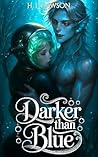 Darker than Blue by H.L. Dawson
My rating: 5 of 5 stars
A powerful sequel that deepens the world and the relationships
Darker Than Blue takes everything that worked in the first book and expands it in meaningful and emotional ways. Returning to Mizu’s drowned world feels both familiar and more dangerous, as the story dives deeper into the mysteries surrounding the Sirhunue, their origins, and Mizu’s own place among them.
One of the things I loved in the first book was the worldbuilding, and that continues to shine here. The underwater setting still feels vivid and haunting, filled with crumbling domes, lost technology, and secrets buried beneath the ocean floor. The journey to Boba 3 in particular adds a darker, almost mythic atmosphere to the story. The idea of the Iron Womb—an ancient machine once responsible for creating the Sirhunue but now corrupted and producing terrifying abominations—is both eerie and fascinating. It adds another layer of depth to the already rich setting.
But what really makes this sequel stand out is how much the relationships develop. The bonds between Mizu, Fin, and Mako become far more complicated as the story progresses. The tensions between them feel natural and believable, shaped by secrets, loyalty, and feelings that aren’t always easy to confront. Watching those relationships evolve—sometimes strengthening, sometimes straining under pressure—adds a strong emotional core to the story.
Mizu herself continues to be a compelling protagonist. As she begins to uncover the truth of her heritage and her connection to the Sirhunue, the story explores themes of identity and belonging in thoughtful ways. Being caught between two bloodlines and two possible destinies forces her to question everything she thought she knew about herself and her world. Those internal conflicts give the story a lot of weight, especially as the stakes continue to rise.
Another element that stood out to me was the reappearance of Mizu’s mother. Their fractured relationship adds a deeply personal dimension to the narrative. After years of silence and grief, being forced to confront that history and rebuild trust is no easy task. The emotional tension in those moments helps ground the larger, more epic elements of the plot.
As the story unfolds, the boundaries between human and Sirhunue begin to blur, and the ocean itself seems to be shifting in response to the choices being made. The sense that everything is building toward something larger—something that could reshape the fate of Mizu’s people—keeps the tension high throughout the book.
Overall, Darker Than Blue is a fantastic sequel that deepens the mythology of the series while strengthening the emotional connections between the characters. Readers who enjoyed the first book will likely appreciate how the story expands here, exploring identity, loyalty, and the complicated ties that bind people together.
A gripping continuation of Mizu’s journey, and one that leaves me eager to see where the story goes next.
View all my reviews